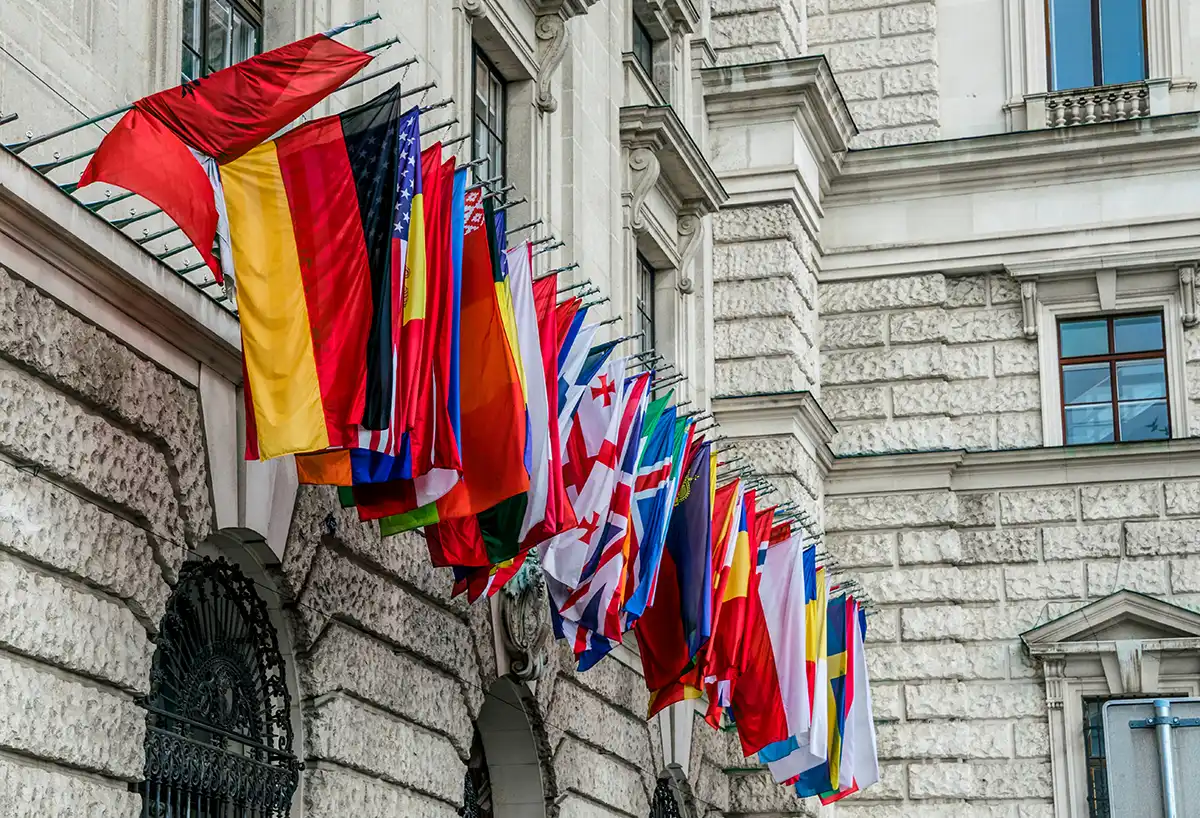
The Australian diplomatic service is one of the most geographically concentrated of any major service in the world. Roughly 100 embassies, high commissions and consulates across the Indo-Pacific and beyond — most of them in a region where the rest of Western foreign policy still treats Asia as a distant theatre, and Australian foreign policy treats it as the front room. Joining the Department of Foreign Affairs and Trade as a graduate or direct-entry diplomat means accepting a working life of three- to four-year postings, decided largely by DFAT, in countries that disproportionately sit on or near Australia's most important strategic and economic relationships.
Most public attention on the diplomatic career fixates on the salary. That's understandable — APS pay bands are public, and the word "ambassador" carries enough cultural weight that people expect the paycheck to match. The reality is more layered. Entry-level diplomats earn solid but unspectacular money, the SES bands rise meaningfully but not to the multiples that comparable roles in mining, consulting or the Big Four would command, and the most interesting part of the compensation never appears on an APS pay table.
That gap between the public image and the actual answer is where the conversation gets useful for anyone seriously thinking about DFAT: what does an Australian diplomat actually earn, and which postings genuinely shape an Indo-Pacific career?
What an Australian diplomat actually earns
New entrants to the Australian diplomatic service typically join through the DFAT Graduate Programme or direct entry at APS5 or APS6 level — roughly AUD 80,000 to AUD 100,000 a year on the home base, depending on entry classification. Solid for a graduate-level public-service entry; well below what a comparable qualification might attract in management consulting, in the resources sector or in the Big Four. It's not the figure most readers associate with the word "ambassador."
Career progression runs through APS6, Executive Level 1 (EL1) and Executive Level 2 (EL2) — mid-career postings as deputies, section heads and Counsellors typically sit in the AUD 110,000 to AUD 170,000 range. The Senior Executive Service tiers (SES1, SES2, SES3) cover ambassadorial and head-of-mission roles, with base salaries generally between AUD 200,000 and AUD 350,000 depending on the post. On top of base, DFAT operates a long-established Overseas Conditions of Service framework — Cost of Living Allowance, Hardship Allowance, accompanying-spouse provisions, school fees for dependants, and housing supplied or subsidised. On a difficult or expensive post the overseas package can change the financial picture significantly.
But the most interesting part of this compensation never appears on a payslip. The real "pay" is structural: a career across five to seven postings, mostly in Asia and the Pacific, raising a family in three languages, the access that comes from representing Australia in rooms where Indo-Pacific decisions are made, and the operational weight of being part of a foreign service whose region — in a way few other services can claim — is now the centre of global strategic attention. That form of compensation explains, more than any APS classification, which postings inside DFAT are quietly fought over.
- Strategic weight of the country for Australian foreign-policy, security and economic interests in the Indo-Pacific era
- Visibility from Canberra — work read by the Foreign Minister or PM&C accelerates a diplomatic career
- Quality of life on post: housing, schools, climate, medical access and family fit
- Language and operational complexity — Mandarin, Indonesian, Korean and Japanese posts attract language allowances and compounding workload
- Hardship and security profile: harder posts attract higher allowances and disproportionate career-shaping value

Which DFAT postings get fought over rarely comes down to base pay alone. Mandate, representation, daily life and operational pressure carry far more weight.
LIGHTFIELD STUDIOS / Adobe Stock
China is Australia's largest trading partner and most operationally demanding bilateral relationship — Beijing is the post where that complexity actually lives.
If there's a single DFAT posting that signals seniority and resilience, it's the Australian Embassy in Beijing. China is Australia's largest trading partner — iron ore, coal, agricultural exports, education services — and at the same time the bilateral relationship most reshaped by strategic competition over the last decade. An ambassador in Beijing works inside both realities every day, supported by Australian consulates-general in Shanghai, Guangzhou, Hong Kong and Chengdu.
What makes Beijing demanding for an Australian diplomat is the layering. Trade and resource diplomacy, the political file that has swung from boom to wine-and-barley tariffs and back, consular work for hundreds of thousands of Chinese-Australians and Australians transiting China, and the constant operational reality of working in a high-surveillance environment. Mandarin proficiency carries a language allowance and a long-term career premium.
Inside DFAT, Beijing is one of the most career-defining posts available. It is not a quality-of-life tour — air quality alone is a real cost — but the file weight and the visibility from Canberra reshape what comes next in an officer's career, more reliably than almost any other posting in the network.
Indonesia is Australia's most consequential immediate neighbour — and Jakarta is the embassy that runs the substance of that relationship.
The Australian Embassy in Jakarta runs what is arguably the most operationally important bilateral relationship Australia maintains in the region. Indonesia is Australia's nearest large neighbour, a country whose 280-million population, growing middle class and strategic geography matter to Australia's economic and security future in ways few Australians fully appreciate. The embassy is supported by Australian consulates-general in Bali (Denpasar) and Surabaya.
The professional appeal of Jakarta is the substance. Counter-terrorism cooperation, maritime border management, the people-to-people flows (over a million Australians visit Bali each year), the bilateral trade and investment file under IA-CEPA, the education and language partnerships, and the steady diplomatic work of managing a relationship that doesn't always make front-page news but never stops mattering. Indonesian-language proficiency carries weight in DFAT promotion logic.
For an Australian diplomatic career, a Jakarta tour is the kind of assignment that compounds. It teaches Indo-Pacific reality in a way that no other post quite does — and it places an officer at the centre of a bilateral file that almost every subsequent posting will reference, whether they end up in Washington, Beijing or back in Canberra.
India's diplomatic weight in Australian foreign policy has shifted more in five years than in the previous fifty — and the High Commission in New Delhi is at the centre of that shift.
The Australian High Commission in New Delhi runs a bilateral relationship that has changed shape faster than almost any other in DFAT's network. Quad coordination on the Indo-Pacific, the ECTA (Australia-India Economic Cooperation and Trade Agreement) followed by CECA negotiations, defence and maritime cooperation, the rapidly growing Indian-Australian community as one of the most significant migration sources of the past decade — all of it sits on this post's desk.
What makes a New Delhi tour distinctive professionally is the scale. India is the kind of country at which diplomats grow — the bilateral file rewards officers who can absorb large complexity, track multiple workstreams (economic, education, defence, technology, energy) at once, and represent Australia inside a political ecosystem that operates by different rules than the Australian one. A High Commissioner in New Delhi is, increasingly, an SES posting that is fought over the way Washington once was.
The fact that the mission carries the formal title of High Commission — the Commonwealth convention for diplomatic representation between member states — doesn't change the underlying reality. It functions for all practical career purposes as an embassy, and the work is among the most substantive in the network.
Family-friendly daily life, a regional consular hub, and a bilateral relationship that runs on tourism, defence and South-East Asian diplomacy.
The Australian Embassy in Bangkok is one of those postings the public would describe as "lifestyle" — and DFAT insiders would describe as "lifestyle plus a substantial regional file." Thailand attracts more than a million Australian visitors a year. The bilateral relationship covers defence cooperation, trade under the Thailand-Australia FTA, education flows, and a steady consular caseload that includes high-profile incidents along the tourist circuit. The embassy is supported by the Australian consulate-general in Phuket.
The professional appeal is the combination of substance and liveability. Bangkok is a comfortable post for diplomatic families — international schools, accessible medical infrastructure, manageable climate trade-offs, short flights to most other ASEAN capitals, and a host society that is generally welcoming to Australian diplomatic presence. For mid-career officers building a regional profile, Bangkok offers the kind of posting where serious work and a serious family life can both run on a high plane.
The trade-off is that Bangkok doesn't carry the same name-recognition prestige as Beijing or Washington in the DFAT promotion logic. But for many officers — particularly those who see ASEAN as the region that will define Australian foreign policy for the next twenty years — that's exactly why Bangkok is the right post at the right time, not despite the comfort but partly because of it.
Australia's European relationships have shifted since AUKUS and Ukraine — and Berlin is the post inside DFAT that has felt that shift most.
The Australian Embassy in Berlin runs the bilateral relationship with Australia's largest European trading partner and one of its most operationally important European interlocutors. Germany has, since 2022, become a more central conversation partner for Australian foreign policy — on Ukraine support and the broader rules-based-order file, on European industrial and technology cooperation, on shared positions in multilateral fora, and on the European dimension of Indo-Pacific diplomacy that AUKUS reshaped.
What makes Berlin distinctive in the DFAT network is that it offers European quality of life and substantive work in a way that no other Australian posting in Europe quite matches. Excellent schools, accessible medical care, a host society that is welcoming and culturally accessible to Australians, and short reach to Brussels, London and Eastern Europe. The mission is supported by the Australian consulate in Frankfurt, which carries the trade and economic relationship in the Rhine-Main commercial centre.
For an Australian diplomatic career, a Berlin tour is the kind of European posting that increasingly maps onto the AUKUS and Indo-Pacific framework — not in spite of being in Europe, but because the European leg of Australia's strategic posture has become operationally bigger than it was a decade ago.
Embassy, high commission, consulate-general and honorary consulate are not the same career experience
Anyone considering DFAT should understand the difference between embassy, high commission, consulate-general and honorary consulate postings. Embassies and high commissions are operationally similar — the high-commission title is the Commonwealth convention for diplomatic representation between Commonwealth countries — and on the DFAT career path the work is comparable. Consulates-general focus on consular operations, trade promotion and regional engagement under a Consul-General. Honorary consulates are part-time appointments, typically held by a private citizen of the host country, and are not part of the DFAT career path.
What changes with the type of mission is the work, the leadership responsibility, and the visibility from Canberra. An ambassadorial or High Commissioner role at a major mission combines political representation, the management of all sections, and direct interlocution with the host government. Heads of consular operations at a Consul-General level run citizen services and regional engagement — a different but equally substantive leadership track.
For anyone moving from general interest into concrete career planning, the page on the diplomatic career is a useful next stop.
DFAT — Department of Foreign Affairs and Trade
The official DFAT site. Bilateral relationships, Australia's embassies and high commissions worldwide, consular services, and the foreign-policy priorities that shape what a posting means.
What we offer — DFAT careers
Official DFAT careers landing page. Graduate programme, direct-entry pathways, conditions of employment, the Enterprise Agreement, and the overseas conditions framework.
DFAT Graduate Programme — APS Jobs
The DFAT graduate-entry portal on the APS Jobs platform. Eligibility, selection process, and how the graduate path leads into the operational diplomatic service.
Executive Remuneration Reporting — DFAT
Annual transparency reporting on Senior Executive Service (SES) remuneration at DFAT — base salary bands, benefits, and the reference point for understanding what ambassadorial-level roles actually pay.
“The real compensation in an Australian diplomatic career doesn't appear on any APS pay band. It shows up in the places you've lived, the relationships you've built, and the question of which postings DFAT officers actually compete for inside the system when the salary stops being the criterion.”
If the criterion is the most operationally consequential bilateral relationship Australia maintains, Beijing is the clearest case in this selection. If it's the neighbour relationship that quietly defines the rest of Australian foreign policy, Jakarta is impossible to overlook. If it's the partner that has shifted shape fastest in the last five years, New Delhi is the post that captures the change. If it's substantive work paired with a serious family life on a comfortable ASEAN post, Bangkok delivers. And if the criterion is the European post whose weight has grown the most in the AUKUS era, Berlin earns its place.
Read this way, the question that started this article — what does an Australian ambassador earn — turns out to be the wrong frame. The right question is which postings a DFAT officer would actually fight for inside the service if APS classification weren't the criterion. The real compensation in this career is not the monthly base; it's the sum of the places lived, the relationships built, and the rooms where, for a few years at a time, an Australian diplomat was the voice of Australia.